Sapporo’s Wild Soul: Where Culture Meets Nature in Winter’s Embrace
Nestled in the heart of Hokkaido, Sapporo is more than just a city of snow festivals and ramen. It’s where nature and tradition coexist in quiet harmony. From misty mountains to sacred Ainu rituals, every corner tells a story. The crisp air carries whispers of ancient forests, while modern life moves with seasonal rhythm. I’ll take you through breathtaking landscapes shaped by time and sustained by centuries-old customs. This is not just travel — it’s connection. In Sapporo, the wild is not separate from the human; it is woven into daily life, celebrated in food, art, and silence alike.
Arrival in Sapporo: First Impressions of a City Rooted in Nature
Stepping off the plane at New Chitose Airport, visitors are immediately met with a sense of openness that feels distinct from other major Japanese cities. The air is clean and carries a faint earthy freshness, especially in winter when snow blankets the surrounding hills. As the train glides toward central Sapporo, wide boulevards and geometric city planning unfold, inspired by American urban design yet deeply attuned to natural surroundings. Unlike the dense verticality of Tokyo or Osaka, Sapporo breathes — its layout allowing space for rivers, parks, and mountain vistas to remain visible even in the city center.
The presence of nature is never far. On clear days, Mount Teine rises to the west, its slopes dusted with snow for nearly half the year, offering both a visual landmark and a recreational haven for skiers and hikers. To the east, the Toyohira River cuts through residential neighborhoods, flanked by cycling paths and pedestrian walkways that invite residents outdoors year-round. Green belts crisscross the city, not as afterthoughts but as integral components of urban life. These deliberate choices in city planning reflect a cultural value: that human settlements should not conquer nature, but coexist with it.
Public transportation further strengthens this connection. The Sapporo Municipal Subway, efficient and clean, links urban dwellers to natural escapes within minutes. Stops near Nakajima Park or Maruyama Park place forests and wildlife within easy reach. Even during peak commuting hours, it’s common to see people carrying hiking gear or ski equipment, underscoring how seamlessly outdoor life integrates with daily routines. This accessibility ensures that nature is not a luxury reserved for weekends, but a consistent presence in the lives of Sapporo’s residents.
The Heartbeat of the Seasons: How Nature Shapes Sapporo’s Rhythm
In Sapporo, time is measured not only by clocks but by the turning of the seasons. Each shift brings a transformation so profound that it alters the rhythm of life itself. Autumn arrives with a blaze of color — golden ginkgo trees lining Odori Street, their leaves fluttering down like slow rain. This season is brief but deeply cherished, a final burst of warmth before winter’s deep freeze. Locals take evening strolls under the canopy, savoring the cool air and the scent of fallen leaves, knowing that soon the city will be buried beneath snow.
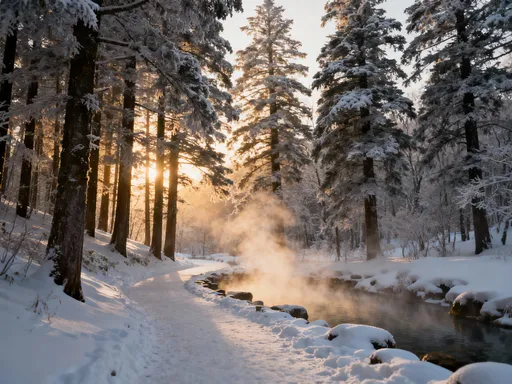
Winter dominates the calendar, lasting from December through March, with frequent snowfalls that accumulate into soft white drifts. Yet rather than retreat indoors, Sapporo embraces the cold. Children build snow forts in parks, families gather at outdoor ramen stalls, and the annual Sapporo Snow Festival transforms Odori Park into a gallery of ice sculptures lit by colorful lanterns. Snow is not an obstacle; it is a medium for creativity and community. At the same time, practical adaptations define daily life — heated sidewalks, insulated homes, and layered clothing ensure comfort without isolation from the outdoors.
Spring’s arrival is subtle but powerful. As temperatures rise, snowmelt feeds rivers and replenishes groundwater, supporting Hokkaido’s fertile farmland. Farmers prepare fields for planting, knowing the short growing season demands precision. By summer, the landscape bursts with green — vast fields of corn, potatoes, and melons stretch across the countryside. These crops are not just agricultural outputs; they are expressions of the region’s volcanic soil and cool climate. Even the famous Yubari melon, known for its sweetness and high value, owes its quality to the dramatic temperature shifts between day and night in summer. Thus, every meal becomes a reflection of the land’s seasonal pulse.
Moerenuma Park: Isamu Noguchi’s Vision of Art and Earth
On the eastern edge of Sapporo lies one of Japan’s most unique public spaces — Moerenuma Park, a masterpiece conceived by the renowned Japanese-American sculptor Isamu Noguchi. Designed in the 1980s and completed after his death in 2005, the park embodies Noguchi’s philosophy that art should not stand apart from nature, but emerge from it. His vision was clear: one park, one mountain, one planet — a unified space where sculpture, landform, and human experience converge.
The park spans over 188 hectares, yet feels intimate and purposeful. At its heart stands the glass pyramid, a translucent structure that houses an events hall, glowing softly like a lantern at dusk. Nearby, the “Momo” sculpture — a large red steel orb — rests on a hill, echoing the shape of the sun or a fruit, inviting both contemplation and play. Water flows through carefully designed channels, mimicking natural streams, while open fields stretch toward the horizon, unobstructed by fences or signage. Every element is intentional, guiding visitors not with rules, but with subtle cues from the landscape itself.
What makes Moerenuma Park truly special is how it balances structure and freedom. In spring, cherry blossoms bloom along the pathways; in summer, families picnic on the grassy expanses; in winter, the fields become a canvas for snow art and cross-country skiing. The park does not impose a single experience — instead, it offers space for personal connection with art and earth. Children run freely, photographers capture light on metal surfaces, and elders meditate near quiet ponds. Here, Noguchi’s dream lives on: a place where nature is not just preserved, but reimagined as living art.
The Ainu Connection: Indigenous Culture in a Modern Setting
Beneath Sapporo’s modern surface flows a deeper history — that of the Ainu, the indigenous people of Hokkaido, whose relationship with nature has shaped the island’s cultural soul for centuries. For the Ainu, mountains, rivers, and animals are not resources to be used, but kamuy — spiritual beings to be respected and honored. Their worldview centers on reciprocity: humans receive gifts from nature, and in return, express gratitude through rituals, storytelling, and craftsmanship.
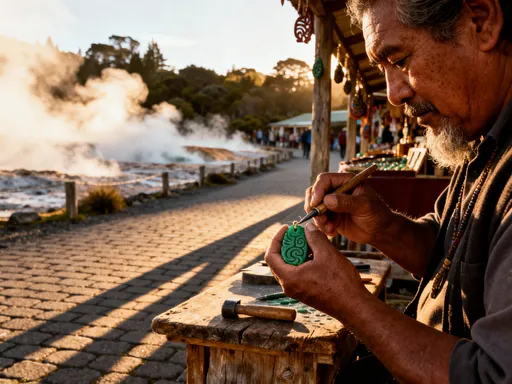
A short journey south of Sapporo leads to the Symbolic Space of Ainu History in Shiraoi, a nationally supported cultural complex opened in 2020 to preserve and share Ainu heritage. The site includes reconstructed traditional homes called chise, built from wood and thatch, where visitors can observe daily life as it once was. Inside, elders demonstrate intricate woodcarving, weaving, and embroidery, each pattern carrying symbolic meaning tied to animals like the bear, owl, or salmon. The air fills with the sound of the tonkori, a plucked string instrument whose melodies mimic wind and water.
One of the most profound experiences at the center is the Iomante ceremony, a reenactment of the bear send-off ritual. Though the original practice is no longer performed due to legal and ethical considerations, the dramatized version conveys its essence: the bear, raised with care, is returned to the spirit world with songs and offerings, ensuring balance between worlds. This deep ecological wisdom — that all life is interconnected — resonates strongly today, especially as global conversations turn toward sustainability and environmental ethics.
Efforts to revitalize Ainu culture have gained momentum in recent decades. In 2019, the Japanese government officially recognized the Ainu as indigenous people, a milestone after years of assimilation policies. Today, Ainu motifs appear in public art, museums, and even tourism branding in Sapporo. While challenges remain, including economic disparities and cultural appropriation concerns, the growing visibility of Ainu traditions offers hope. In a city shaped by snow and seasons, their voice reminds us that true culture begins not in cities, but in forests, rivers, and the quiet reverence for all living things.
Day Trip to Jozankei: Hot Springs and Forest Therapy
Just 30 kilometers southwest of Sapporo, nestled in a valley along the Toyohira River, lies Jozankei — one of Hokkaido’s most beloved hot spring resorts. The journey there is part of the experience: winding roads pass through dense cedar and birch forests, with steam rising from riverbanks where underground heat meets cold mountain water. Established in the late 19th century by a Buddhist monk who discovered the therapeutic springs, Jozankei remains a sanctuary for rest, reflection, and rejuvenation.
The onsen culture here is deeply rooted in tradition. Many ryokan (traditional inns) offer private and communal baths fed by natural hot springs rich in sulfur and minerals, believed to ease muscle pain, improve circulation, and soothe skin conditions. Soaking in an open-air bath surrounded by autumn foliage or under a blanket of snow is an almost meditative experience — the warmth of the water contrasting with crisp air, the sound of the river flowing nearby. It is a moment of stillness, a pause in the rush of modern life.
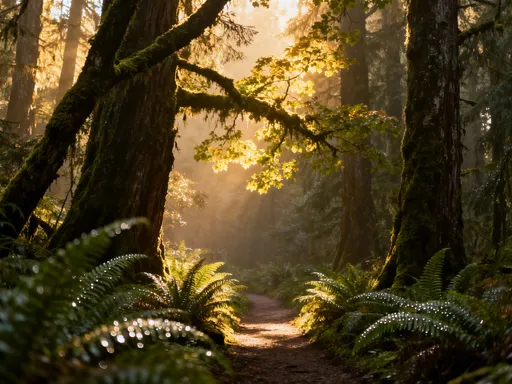
Equally important is the concept of *shinrin-yoku*, or forest bathing — the practice of immersing oneself in the atmosphere of the woods. Scientific studies have shown that spending time in forests can reduce stress hormones, lower blood pressure, and boost immune function. In Jozankei, this is not a trend, but a way of life. Walking trails wind through ancient cedars, their trunks wide and fragrant, their canopies filtering sunlight into soft green light. Benches along the path invite quiet sitting; some visitors bring journals or sketchbooks, allowing the forest to inspire creativity.
Responsible tourism is essential to preserving Jozankei’s beauty. Visitors are encouraged to follow eco-friendly practices — using biodegradable soaps in baths, minimizing waste, and respecting wildlife. Many lodgings now use solar heating, recycle water, and source meals from local farms. By choosing mindful stays, travelers support not only their own well-being but the long-term health of the environment. In this valley, nature gives generously — and asks only that we receive its gifts with gratitude.
Food as Landscape: From Farm to Bowl in Sapporo’s Cuisine
To understand Sapporo is to taste it — and what you taste is the land itself. The city’s cuisine is inseparable from Hokkaido’s natural abundance. Vast plains, volcanic soil, cold seas, and clean water create ideal conditions for dairy, grains, vegetables, and seafood. Milk from pasture-raised cows is richer and creamier; potatoes grow large and starchy; scallops and king crab from the Sea of Japan are sweet and succulent. Every ingredient tells a story of place.
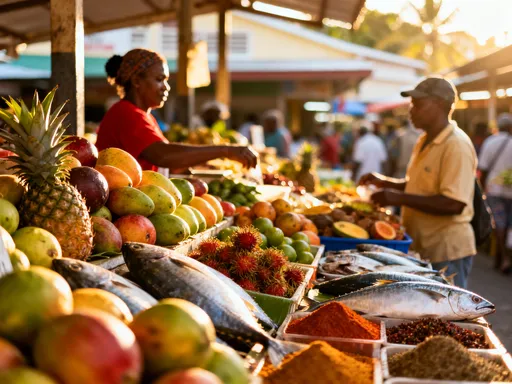
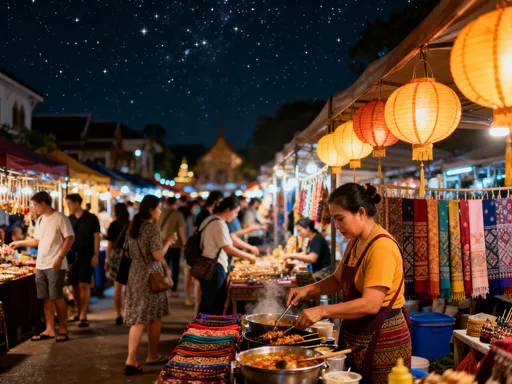
A visit to the Nijo Market in central Sapporo offers a sensory introduction to this farm-to-table reality. Open since the 1920s, the market buzzes with energy each morning as fishermen unload fresh catches and farmers display seasonal produce. Stalls sell bright orange sea urchin, plump shrimp, and miso-glazed salmon, while small eateries serve steaming bowls of soup and grilled shellfish. The air is salty and warm, filled with the sizzle of grills and the chatter of locals beginning their day.
Perhaps no dish captures Sapporo’s culinary identity better than miso ramen. Born in the mid-20th century as a hearty meal for cold winters, it combines thick, chewy noodles with a rich broth made from pork bones and fermented soybean paste. Toppings often include butter, corn, and bean sprouts — ingredients that reflect Hokkaido’s agricultural strengths. This ramen is not just comfort food; it is a product of climate and history, born from the need to sustain energy in long, snowy months.
Sustainability underpins much of Hokkaido’s food culture. Many farms practice crop rotation and avoid heavy pesticide use, preserving soil health. Fisheries follow seasonal quotas to protect stocks, and community-supported agriculture (CSA) programs are growing in popularity. Even in restaurants, menus increasingly highlight local sourcing, with dishes labeled by their region of origin. In Sapporo, eating is not passive — it is an act of connection, a way to honor the land that feeds the city.
Beyond the Guidebook: Finding Quiet Moments in Sapporo’s Natural Sanctuaries
While the Snow Festival and Odori Park draw international attention, some of Sapporo’s most meaningful experiences lie off the beaten path. These are the quiet corners where nature and stillness prevail — places where time slows and the soul breathes. Along the edges of Odori Park, where tall buildings give way to riverbanks, walking paths follow the Sapporo River, shaded by willows and alders. Early in the morning, before the city wakes, joggers, dog walkers, and elderly couples move at a gentle pace, wrapped in scarves and gloves.
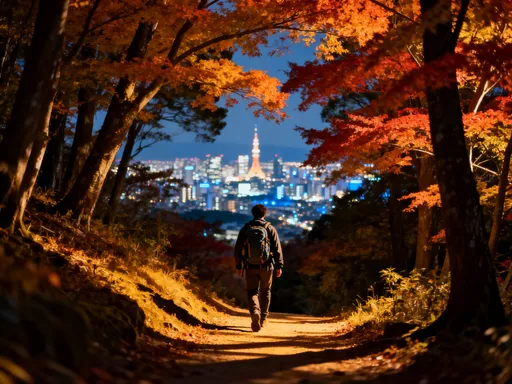
For panoramic views without crowds, Mount Fuyo — also known as TV Tower Mountain — offers a modest hike with rewarding vistas. On clear days, the entire city spreads below, framed by distant mountains and the Sea of Japan. In winter, the trail is dusted with snow, and the silence is profound. At the summit, a small Shinto shrine stands quietly, its red gate glowing against white snow — a reminder of the spiritual dimension woven into the landscape.
Maruyama Park, home to Hokkaido Shrine, is another sanctuary. Surrounded by forest, the shrine complex feels secluded despite its central location. Visitors clap their hands in prayer, toss coins into offering boxes, and tie wooden ema plaques with wishes. But equally sacred are the moments between rituals — watching snow fall silently onto moss-covered stones, or hearing the call of a distant bird. These are not tourist attractions; they are living spaces where nature and reverence coexist.
Slowing down allows deeper appreciation. A bench by the water, a cup of tea in a garden, a pause to watch ducks glide across a pond — these small acts become forms of mindfulness. In a world that values speed and efficiency, Sapporo offers an alternative: the wisdom of stillness, the beauty of waiting, the grace of simply being present in a place shaped by wind, water, and time.
Conclusion: Why Sapporo Reminds Us That Nature Is Culture
Sapporo does not shout its wonders. It does not need to. Its power lies in quiet moments — the steam rising from a river, the crunch of snow underfoot, the warmth of miso soup on a cold night. What makes this city unique is not any single festival or landmark, but the way nature and culture are not seen as separate, but as one continuous thread. From the design of its parks to the flavors of its food, from the spirituality of the Ainu to the rhythm of the seasons, Sapporo teaches that true cultural depth arises from a respectful relationship with the land.
In an age of rapid urbanization and environmental uncertainty, Sapporo stands as a model of balance. It shows that cities can grow without destroying nature, that tradition can thrive alongside modernity, and that well-being comes not from isolation, but from connection. Travelers who come seeking only spectacle may miss the essence. But those who walk gently, listen closely, and open their senses will find something deeper — a reminder that culture is not just what we build, but what we protect.
So let us move through this northern city with reverence. Let us taste the snowmelt in the water, hear the wind in the cedars, and feel the warmth of the earth in a bowl of ramen. Let us remember that every landscape holds a story, and every season carries wisdom. In Sapporo’s wild soul, we rediscover a truth long known: that to live well, we must live in harmony — with nature, with history, and with each other.