Lost in Wild Beauty: What I Found in the Canary Islands’ Protected Paradises
You know that feeling when nature just hits you in the face with pure magic? That’s exactly what happened in the Canary Islands. Far from the crowded beaches, I discovered vast protected areas where volcanic peaks kiss cloud forests and rare lizards scurry across ancient lava fields. These natural sanctuaries aren’t just scenic—they’re alive with stories, silence, and soul. This is exploration at its most raw and real. Let me take you where the wild things still thrive.
The Untamed Heart of the Canary Islands
The Canary Islands, an archipelago located off the northwest coast of Africa, are more than a sun-soaked holiday destination—they are a living laboratory of evolution and resilience. Stretching across the Atlantic like a string of volcanic jewels, these eight major islands host an extraordinary concentration of protected natural spaces. Four of them are designated UNESCO Biosphere Reserves, and several national parks and rural parks safeguard ecosystems found nowhere else on Earth. This network of conservation zones is not merely decorative; it is essential to preserving the islands’ unique biodiversity and cultural memory. From misty laurel forests to lava-strewn highlands, the Canaries’ protected areas reflect millions of years of geological transformation and biological adaptation.
What makes the Canary Islands ecologically distinct is their volcanic origin. Each island emerged from the ocean floor through successive eruptions, creating varied altitudes, microclimates, and soil compositions. Over time, isolation allowed species to evolve independently, resulting in a high rate of endemism. For example, nearly 40 percent of the archipelago’s plant species exist only here. These conditions have earned the Canaries recognition as one of Europe’s most important biodiversity hotspots. The preservation of these environments is not just an environmental imperative—it is a cultural one. Indigenous Guanche communities once lived in harmony with these landscapes, and traces of their agricultural terraces, cave dwellings, and oral traditions remain embedded in the land.
Today, responsible tourism plays a crucial role in sustaining these ecosystems. Visitors who venture beyond resort zones into protected areas contribute to conservation through park fees, guided eco-tours, and support for local stewardship initiatives. The islands’ authorities enforce strict regulations within natural parks, including controlled access, restricted development, and reforestation campaigns. These measures ensure that future generations can experience the same sense of awe felt by those who first gaze upon a sunrise over Teide or hear the whisper of wind through an ancient laurel forest. The Canaries remind us that beauty and balance are not accidental—they are choices we make every day.
Teide National Park: Where Earth Meets Sky
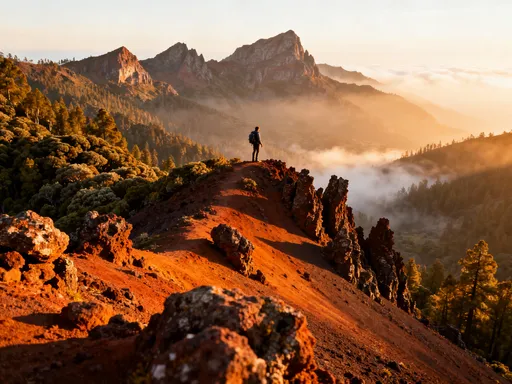
Rising 3,718 meters above sea level, Mount Teide dominates the skyline of Tenerife and stands as the highest peak in Spain. Crowned with snow in winter and glowing amber at sunrise, this stratovolcano is the centerpiece of Teide National Park, a UNESCO World Heritage Site since 2007. The park covers over 18,000 hectares of surreal terrain shaped by volcanic activity over hundreds of thousands of years. Its otherworldly landscape—complete with red craters, black lava flows, and twisted rock formations—resembles the surface of Mars, making it a favored location for astronomical research and even film production. Yet beyond its dramatic appearance lies a fragile alpine ecosystem teeming with life adapted to extreme conditions.
One of the most remarkable sights in the park is the red tajinaste (Echium wildpretii), a towering flowering plant that blooms only once in its lifetime, sending up a crimson spike that can reach three meters in height. This striking biennial thrives in the mineral-rich volcanic soil and typically flowers between May and July, attracting pollinators like the Canary Islands bee. Other endemic species include the Teide violet and the blue chaffinch, a rare bird found almost exclusively in the high-altitude pine forests surrounding the summit. Despite the harsh climate—intense solar radiation, freezing nights, and strong winds—these organisms have developed unique survival strategies, a testament to nature’s ingenuity.
For visitors, accessing the summit has never been easier, thanks to a modern cable car that ascends to within 200 meters of the peak. However, those seeking a deeper connection with the mountain often choose to hike one of the many marked trails, such as the popular route from Montaña Blanca or the challenging ascent via La Rambleta. A permit is required to climb the final stretch to the summit, limiting numbers and protecting the sensitive environment. Altitude awareness is also important; visitors are advised to acclimate gradually, stay hydrated, and avoid strenuous activity if experiencing dizziness or nausea.
Equally awe-inspiring is the night sky above Teide. Designated as a Starlight Reserve, the park offers some of the clearest stargazing conditions in the world due to minimal light pollution and stable atmospheric conditions. The Teide Observatory, operated by the Instituto de Astrofísica de Canarias, hosts public viewing nights and educational programs, allowing guests to peer into distant galaxies through powerful telescopes. Whether bathed in golden dawn light or studded with stars, Mount Teide inspires reverence—a reminder that Earth’s greatest wonders often lie where few dare to tread.
Anaga Rural Park: The Green Lung of Tenerife
Nestled in the northeastern tip of Tenerife, Anaga Rural Park is a sanctuary of emerald greenery and quiet mystery. Designated a UNESCO Biosphere Reserve in 2015, this mountainous region is home to one of the largest remaining laurel forests in the world—known locally as *laurisilva*. These ancient woodlands, once widespread across southern Europe, survived extinction thanks to the Canaries’ stable climate and isolation. Today, Anaga’s fog-draped canopy shelters hundreds of endemic plant and animal species, including the elusive Anaga wall gecko and the Tenerife blue chaffinch. Walking through this forest feels like stepping into another era, where time slows and the air hums with moisture and birdcall.
One of the most beloved trails in the park is the path from Chamorga to Taganana, a moderate hike that winds through banana plantations, stone staircases, and dense forest. As you descend, mist curls around千年 trees draped in moss and ferns, their roots gripping the steep slopes like hands. Along the way, small villages with whitewashed houses and red-tiled roofs cling to the mountainside, their inhabitants descendants of early settlers who farmed these rugged lands for centuries. These communities maintain traditional practices, from goat herding to handcrafting palm honey, offering visitors a glimpse into a way of life shaped by isolation and resilience.
The cultural significance of Anaga extends back to the pre-Hispanic Guanche people, who considered this area sacred. Archaeological sites, including cave dwellings and ceremonial spaces, dot the landscape, many still unexcavated. Oral histories passed down through generations speak of spirits inhabiting the forest and rituals performed under the full moon. While these stories are not scientifically verifiable, they underscore the deep spiritual connection between people and place—a bond that modern conservation efforts strive to honor.
To protect this delicate ecosystem, access to certain zones is regulated, and guided walks are encouraged. Local cooperatives offer eco-tours led by naturalists who explain the forest’s ecological functions, such as fog interception, which provides a critical source of freshwater. Visitors are reminded to stay on marked trails, avoid picking plants, and carry out all waste. Accommodations in nearby villages often operate as rural guesthouses (*casas rurales*), providing income to families while promoting low-impact tourism. Anaga is not a place to rush through; it is a place to breathe deeply, listen closely, and remember that wilderness is not just a resource—it is a relationship.
Garajonay National Park: Walking Through Clouds
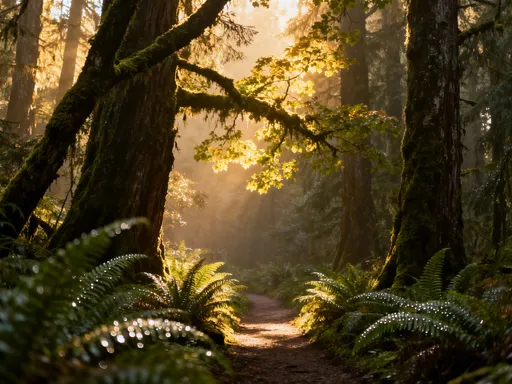
On the island of La Gomera, Garajonay National Park rises like a fortress of green from the Atlantic. Covering 40 square kilometers, this UNESCO World Heritage Site protects the best-preserved example of laurisilva forest in the Canaries. Fed by moisture-laden trade winds that roll in from the ocean, the park is almost perpetually wrapped in mist, creating a humid microclimate ideal for lush vegetation. Moss blankets tree trunks, ferns unfurl in every crevice, and the air carries the scent of damp earth and wild herbs. Sunlight filters through the canopy in soft, dappled patterns, lending the forest an almost mystical quality. To walk here is to move through a living cloud, where silence is broken only by the call of the Gomera warbler or the rustle of a passing lizard.
Among the park’s most fascinating inhabitants is the Gomera giant lizard (*Gallotia bravoana*), a species once thought extinct until rediscovered in the 1990s. Now protected under strict conservation programs, these reptiles are slowly making a comeback in controlled habitats. Other endemic species include the Gomera skink and the laurel pigeon, which nests in the high canopy and feeds on native fruits. The forest itself is dominated by trees such as viñátigo, barbusano, and til, some of which are over 500 years old. Their intertwined branches form a continuous canopy that helps retain moisture and stabilize the soil, playing a vital role in the island’s hydrology.
Well-maintained trails allow visitors to experience the forest without disrupting its balance. The El Cedro trail leads through a restored section of woodland where reforestation efforts have revived degraded areas. Interpretive signs explain the ecological importance of each species and the threats posed by invasive plants like eucalyptus and acacia. Another popular route, Los Tiles, begins at a visitor center and follows a loop through the heart of the forest, offering panoramic views of the coastline from elevated viewpoints. These paths are designed to minimize erosion and concentrate foot traffic, ensuring that the most sensitive zones remain undisturbed.
Perhaps Garajonay’s most vital function is its role in water regulation. The forest acts as a natural sponge, capturing fog droplets and channeling them into underground aquifers that supply much of La Gomera’s freshwater. This process, known as horizontal precipitation, is essential in an archipelago where rainfall is limited and unevenly distributed. Conservationists emphasize that protecting Garajonay is not just about preserving beauty—it is about securing the island’s most fundamental resource. Visitors leave with more than photographs; they carry a deeper understanding of how interconnected life truly is.
Caldera de Taburiente: A Hidden Giant in La Palma
On the island of La Palma, often called “La Isla Bonita,” lies one of the most dramatic geological formations in the Atlantic: Caldera de Taburiente. Though its name suggests a volcanic crater, it is actually a massive erosion caldera—ten kilometers wide and over a kilometer deep—formed by millions of years of water and wind carving into an extinct volcanic shield. Now protected as a national park, this vast amphitheater of rock and forest offers some of the most rewarding trekking experiences in the Canaries. Pine forests of Canary Island pine blanket the slopes, their resinous scent filling the air after rain, while streams cascade down narrow ravines into crystal-clear pools perfect for quiet reflection.
The Ruta de los Volcanes, a multi-day hiking trail that crosses several islands, includes a breathtaking segment through the caldera’s rim. Hikers traverse high-altitude paths with panoramic views of the surrounding peaks and the deep green interior below. Other routes, such as the descent to Los Colmillos or the path to Barranco de las Angustias, offer intimate encounters with the park’s geology and flora. These trails are carefully maintained to prevent erosion, with stone steps and wooden railings installed in steep sections. Rangers regularly monitor trail conditions and provide updates at information kiosks, ensuring visitor safety and environmental protection.
Conservation efforts in Caldera de Taburiente focus on reforestation and habitat restoration. After decades of deforestation for agriculture and grazing, large-scale planting programs have helped regenerate native pine forests. Scientists also monitor soil stability and water quality, as the caldera plays a key role in collecting and filtering rainfall. The park’s streams feed into the island’s aquifer system, supporting both natural ecosystems and human communities. Educational programs at the La Cumbre visitor center teach guests about these processes, fostering a sense of responsibility among travelers.
Because of its remote location and lack of mass tourism infrastructure, the caldera attracts those seeking solitude and introspection. There are no souvenir shops, no loud music, no crowds—only the sound of wind and water. This stillness invites a different kind of discovery, one that is internal as much as external. For many visitors, standing at the edge of this ancient bowl feels like standing at the edge of time itself—a humbling reminder of nature’s power and patience.
Fuerteventura and Lanzarote’s Protected Landscapes
While often associated with beach resorts, the eastern islands of Fuerteventura and Lanzarote harbor some of the Canaries’ most striking arid landscapes—and some of its most carefully protected zones. Fuerteventura’s Corralejo Natural Park, located at the northern tip of the island, encompasses vast dune systems, volcanic hills, and pristine coastal stretches. Golden sands shift with the wind, creating an ever-changing desert-like scene that contrasts sharply with the turquoise waters of nearby beaches. The park is home to specialized flora such as sea daffodils and salt-tolerant shrubs, as well as nesting sites for seabirds like the little shearwater. Designated walking boards and marked trails help visitors explore without damaging fragile dune vegetation.
On Lanzarote, Timanfaya National Park offers a vision of Earth’s raw power. This volcanic landscape, shaped by eruptions between 1730 and 1736, covers over 50 square kilometers of solidified lava fields, cinder cones, and scorched earth. Temperatures beneath the surface still reach over 600°C in places, a fact demonstrated at the park’s geothermal demonstrations where staff ignite gas vents or boil water using underground heat. Despite its barren appearance, life persists here—hardy lichens colonize rock surfaces, and specialized insects thrive in microhabitats. The park is accessible only through guided bus tours or designated footpaths, minimizing human impact while allowing safe exploration.
Both islands also host important marine reserves. In Fuerteventura, the Los Gazulos Marine Reserve protects seagrass meadows and coral-like formations that serve as nurseries for fish and feeding grounds for loggerhead turtles. Snorkeling and diving are permitted under strict guidelines to prevent anchor damage and disturbance to marine life. On Lanzarote, the Chinijo Archipelago Natural Park includes the islets of La Graciosa, Alegranza, and Montaña Clara—remote, uninhabited outposts that provide critical habitat for seabirds and endemic reptiles. Access is limited to preserve their ecological integrity, with ferry services operating under environmental protocols.
Development pressures remain a challenge, particularly in coastal areas where tourism infrastructure competes with conservation goals. However, local authorities have implemented zoning laws that restrict construction in sensitive zones and promote renewable energy use. Wind farms on Fuerteventura generate clean power, while Lanzarote’s architectural code—inspired by artist César Manrique—ensures that buildings blend with the natural landscape. These measures demonstrate that economic vitality and environmental protection can coexist when guided by vision and restraint.
How to Explore Responsibly: A Traveler’s Guide
Visiting the Canary Islands’ protected areas is a privilege, not a right—and with that privilege comes responsibility. The most important principle of eco-tourism is leaving no trace. This means carrying out all waste, staying on marked trails, avoiding loud noises, and never disturbing wildlife or removing natural materials like rocks or plants. Many parks provide recycling bins and water refill stations, reducing reliance on single-use plastics. Travelers should also respect local customs, especially in rural communities where tourism is still integrated into daily life rather than dominating it.
Permits and regulations vary by park. In Teide, for instance, summit access requires advance reservation, while in Garajonay, large groups must be accompanied by licensed guides. These rules are not bureaucratic hurdles—they are essential tools for managing visitor impact. Choosing eco-certified accommodations, such as those bearing the EU Ecolabel or the Sostenibilidad Turística certification, ensures that your stay supports sustainable practices. Many family-run guesthouses use solar water heating, collect rainwater, and source food locally, reducing their environmental footprint while enriching the guest experience.
Engaging with local cooperatives and guided tours led by naturalists deepens understanding and contributes directly to conservation funding. These guides often share personal stories, historical insights, and ecological knowledge that transform a simple hike into a meaningful encounter. They also model responsible behavior, from proper waste disposal to respectful wildlife observation. Photography is encouraged, but using drones requires special authorization in most parks due to noise and disturbance risks.
Finally, the concept of slow travel aligns perfectly with the spirit of the Canaries’ protected zones. Instead of rushing from one viewpoint to the next, take time to sit, observe, and listen. Let the forest speak. Let the mountain reveal itself. True discovery is not measured in photos taken or kilometers hiked, but in the shift that occurs within—a growing awareness that we are not separate from nature, but part of it. When we travel with humility and care, we become not just visitors, but stewards.
Wrapping up this journey through the Canary Islands’ wild heart, one truth stands clear: these protected paradises are not escapes from reality, but reflections of it. They show us what the Earth can do when given space to heal, adapt, and thrive. They remind us that beauty is not passive—it is active, dynamic, and deeply interconnected. Every trail maintained, every species protected, every visitor who chooses respect over recklessness contributes to a legacy of care. The Canaries offer a model of balance—where tourism and preservation coexist, where ancient forests breathe alongside modern lives. So seek wonder. Chase sunrise over a volcanic rim. Wander through clouds in a forest older than memory. But do so gently. Tread lightly. For these wild places are not just destinations—they are promises we make to the future.